Are you an active IM user? Most likely you are. Consider this. Many years ago, Instant Messaging was really instant – what you typed in UNIX "talk" or, say, early-days MSN Messenger, appeared at your buddy´s screen immediately as you typed. You were distracting your buddy by making him or her watch you type character by character, as you were making and correcting typos on the way.
Neither senders nor recipients liked it, so Instant Messaging technology evolved into what we should in fact call Near-Real-Time Messaging. In near-real-time, you as the sender take time you need to complete the message and only then send it over by e.g. hitting Enter. This extra time can just be a couple of seconds but it enhances the messaging experience tremendously – you are now sure that your message is perfect, and your buddy gets it all at once and may check on it not immediately but in a couple of minutes when his or her creative flow cycle completes, or he/she gets off the phone talk with the boss.
Now what about voice? Generally, speaking is better than typing. You speak 3 to 4 times faster than you type, and you express emotions with your voice rather than having to insert those funny symbols called smileys which mean different things to different people into your text messages.
An important observation is that currently all voice communication is truly instant (just like IM used to be many years ago).
When you call someone via a regular phone or a VOIP service, you immediately distract your party from whatever he or she might be doing and make him or her listen to you instead. It can be annoying and it´s also dangerous, if your party is in a middle of some real-time action like driving a car. Then, when you are talking and happen to have said something wrong way, you have no way of revoking what you´ve just said. Finally, when you are through you may find that you´ve forgotten about half of things you spoke about – unless you took really detailed notes or involved a typist. Have you ever wondered why makers of VOIP services haven´t incorporated speech recognition into their systems, so that you could actually have history of your talks? The answer is – the technology just cannot do that with the instant type of voice communication. It cannot reliably recognize two or more interwoven voices, as it happens in a regular voice discussion, and it cannot keep up with its normal pace.
Voice mail remedies some of the above problems – it´s not that intrusive as a regular phone talk is, and the messages can be played back again, in case you didn´t quite understand what was that. The sender still cannot revoke a wrongly stated message though, and the current voicemail interfaces, including Internet-based voicemail services, seriously limit usability of these systems for continuous two-way communication. And finally you still cannot search for some keywords through the history of your messages, sent and received.
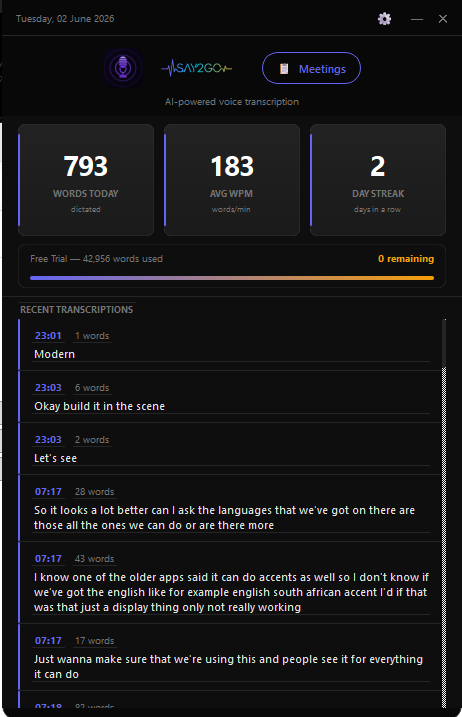
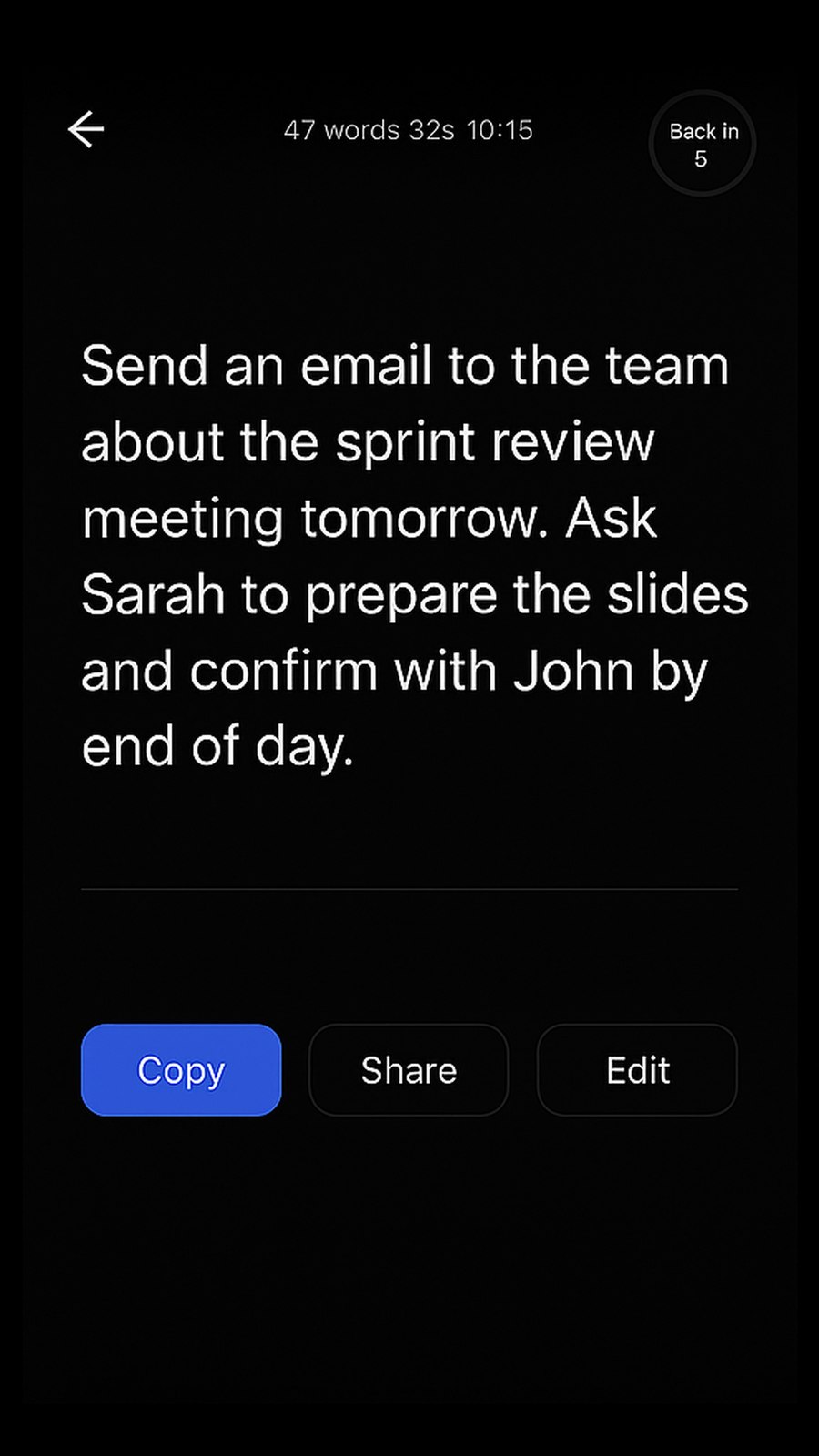
Say2GO fills in this tremendous gap. Check on How It Works